Strength training at home is an accessible and effective way to improve muscle strength, endurance, and overall fitness levels. Whether you want to enhance athletic performance, boost metabolic rate, or maintain a healthy lifestyle, strength training can be conveniently performed without a gym membership. This guide will explore the essentials of home-based strength training, including equipment, exercise selection, program design, safety considerations, and tips for maximizing results.
One significant advantage of home strength training is the flexibility it offers. You can structure your workouts around your schedule and eliminate travel time to the gym. Moreover, working out at home allows for a private, comfortable environment where you can focus solely on your fitness goals. However, successful home strength training requires understanding and implementing fundamental principles and exercises.
The first step in developing a home strength training routine is selecting appropriate equipment. While bodyweight exercises can effectively build strength, having some basic equipment can enhance the variety and effectiveness of your workouts. Essential items include dumbbells or kettlebells for resistance, a resistance band for diverse movements, and a stability or exercise ball for core exercises. Other useful equipment includes a pull-up bar, adjustable weight bench, and a mat for floor exercises.
For those who wish to invest more in their home gym, additional equipment such as a barbell with weight plates, a squat rack, and a cable machine can offer further versatility in training. Whatever equipment you choose, ensure it suits your goals, space, and budget.
Understanding basic exercise movements is crucial for a well-rounded strength training program. Fundamental exercises are often categorized into movement patterns, which allow for a comprehensive approach to training major muscle groups. These patterns include squats, hip hinges, lunges, push movements, pull movements, rotation, and anti-rotation exercises.
Squat variations target the lower body, specifically the quadriceps, hamstrings, calves, and glutes. Examples include the bodyweight squat, goblet squat, and split squat.
Hip hinge exercises focus on the posterior chain, engaging muscles such as the glutes, hamstrings, and lower back. Deadlifts and hip thrusts are common hip hinge variations.
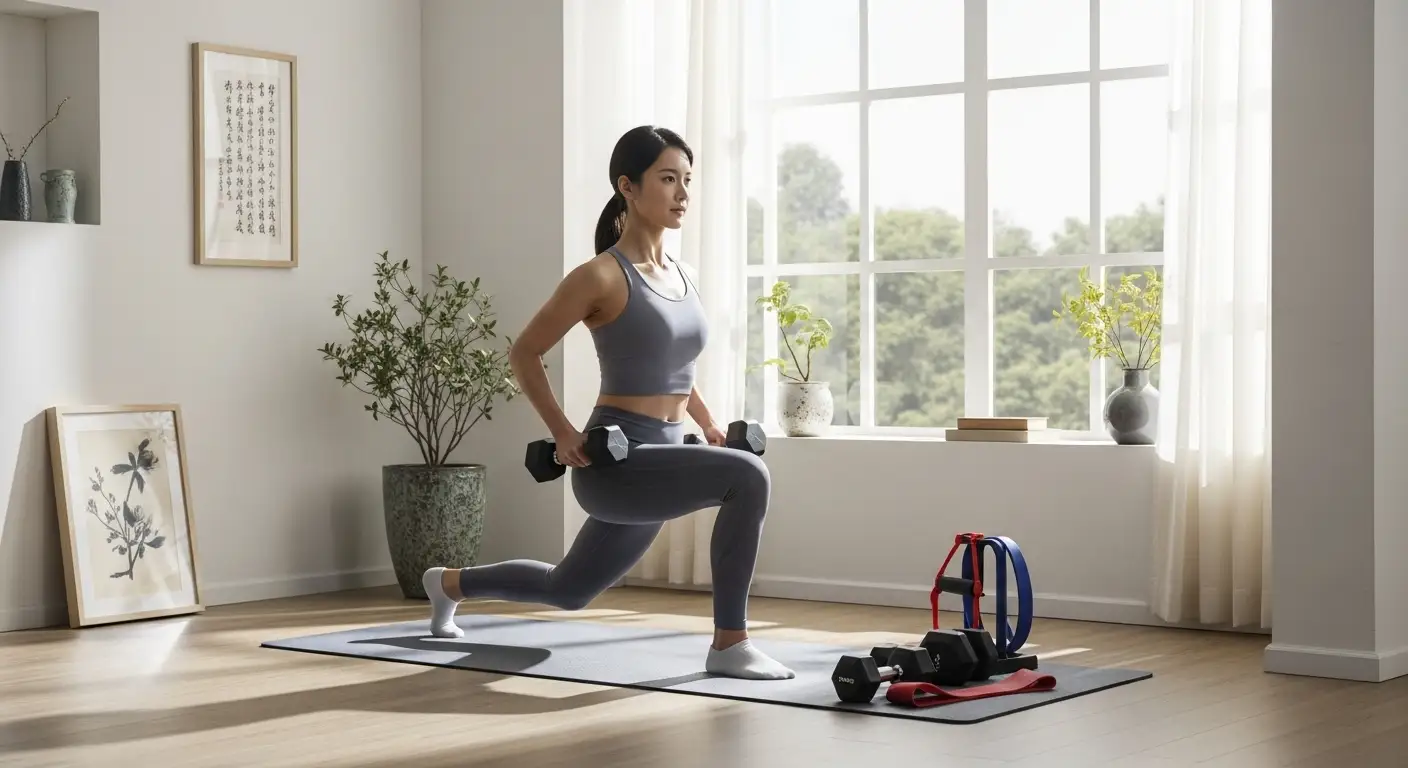
Lunges promote balance and coordination while strengthening the legs and core. Forward lunges, reverse lunges, and lateral lunges are versatile options. Push movements engage the chest, shoulders, and triceps. The push-up and overhead press variations are effective push exercises for home workouts.
Pull exercises focus on the upper back, biceps, and rear shoulders. Pull-ups, inverted rows, and resistance band rows are suitable pulling movements. Rotational movements engage the core through twisting actions, as seen in Russian twists and cable woodchops. Anti-rotation exercises, like the plank and Pallof press, strengthen the core by resisting rotational forces.
When designing a strength training program, it’s vital to consider exercise selection, frequency, intensity, sets, and repetitions. Begin by choosing exercises that target all the major muscle groups and can be performed with the available equipment. A balanced routine often includes a mix of compound exercises (engaging multiple joints and large muscle groups) and isolation movements (targeting specific muscles).
Exercise frequency refers to how often you perform strength training sessions. A common approach is to train each muscle group two to three times per week, which allows for adequate recovery while promoting muscular adaptation. Depending on your experience level and goals, you can tailor workout frequency to fit your needs.
The intensity of a workout is influenced by the amount of weight lifted relative to your maximum capacity. Beginners should focus on mastering form and technique with lighter weights before increasing intensity. Typically, strength-building workouts involve higher weights with lower repetitions, while endurance-focused workouts employ lighter weights with higher reps.
Sets and repetitions are planned based on your goals. For strength and muscle development, traditional programming suggests three to five sets of six to twelve repetitions per exercise. For endurance and general fitness, four to six sets of fifteen to twenty repetitions may be employed. Adjust your program as you progress, and consider incorporating periodization, which entails changing workout variables over time to prevent plateaus and ensure continual progress.
Safety should always be prioritized when training at home. Without the supervision of a trainer, it is essential to learn proper exercise form to reduce the risk of injury. Utilize online resources, books, or videos from credible sources to familiarize yourself with correct techniques for each movement.
A thorough warm-up is a non-negotiable component of any workout routine. Warming up increases blood flow, enhances joint mobility, and prepares the nervous system for the demands of exercise. A dynamic warm-up consisting of light aerobic activity and mobility exercises lasting five to ten minutes is adequate.
Mindful recovery is equally important for safe and effective strength training. Allow muscles to recover between training sessions through adequate rest, ensuring sleep quality and quantity, and staying hydrated. Nutrition also plays a critical role in supporting recovery and performance, so maintain a balanced diet rich in protein, carbohydrates, and healthy fats.
To maximize results, consistently challenge your muscles with progressive overload, which entails gradually increasing the weight, resistance, or difficulty of an exercise. This can be achieved through incremental weight additions, increasing repetitions or sets, or incorporating more challenging exercise variations.
Tracking progress is essential to maintain motivation and monitor improvement. Keep a workout log detailing exercises, sets, repetitions, weights, and any notes on how you feel during or after exercises. This information can help you identify strong areas, track progress, and adjust your training regimen as needed.
Setting realistic goals is key to staying committed and seeing results. Establish short-term, medium-term, and long-term objectives based on your interests, whether it's increasing strength, building muscle, enhancing cardiovascular fitness, or losing weight.
Ultimately, the effectiveness of strength training at home hinges on personalized programming that accommodates individual preferences and physical abilities. By understanding exercise fundamentals, creating balanced routines, prioritizing safety, and following proper progression, individuals can achieve optimal results without ever stepping foot in a gym. Remember, consistency and dedication are your greatest allies on the journey to improved strength and fitness at home.